ZX Spectrum guide
Every ZX Spectrum Model, Compared
From the rubber-keyed 16K of 1982 to Amstrad's +3 and today's remakes: how to tell the Spectrum models apart, and what each one can run.
In short
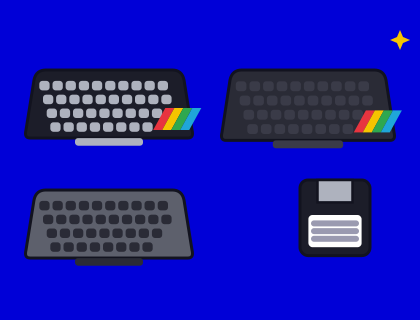
- Sinclair made the 16K, 48K, Spectrum+ and 128K; Amstrad made the +2, +2A and +3.
- The 16K, 48K and Spectrum+ share the same insides. The differences are memory and the case.
- The 128K, +2, +2A and +3 add 128 KB of memory and an AY sound chip.
- The +3 has a built-in 3-inch disk drive; the +2 models have a built-in tape deck.
- Nearly all 48K games run on later models, but some need the 48K mode.
The Spectrum family at a glance
| Model | Year (UK) | Maker | Memory | Sound | Storage |
|---|---|---|---|---|---|
| ZX Spectrum 16K | 1982 | Sinclair | 16 KB | Beeper | External tape |
| ZX Spectrum 48K | 1982 | Sinclair | 48 KB | Beeper | External tape |
| ZX Spectrum+ | 1984 | Sinclair | 48 KB | Beeper | External tape |
| ZX Spectrum 128 | 1986 | Sinclair | 128 KB | Beeper + AY | External tape |
| Spectrum +2 (grey) | 1986 | Amstrad | 128 KB | Beeper + AY | Built-in tape |
| Spectrum +3 | 1987 | Amstrad | 128 KB | Beeper + AY | Built-in 3-inch disk |
| Spectrum +2A / +2B (black) | 1987 onwards | Amstrad | 128 KB | Beeper + AY | Built-in tape |
Dates are UK release years. The 128 was launched in Spain in 1985, before the UK.
The 16K and 48K (1982)
The original Spectrum is the small black machine with grey rubber keys and the rainbow stripe across the corner. The 16K and 48K look the same; only the memory differs, and many 16K machines were later upgraded. Almost every classic game was written for the 48K, and the 16K can only run a small number of early titles.
Both use a Zilog Z80A processor at about 3.5 MHz, a 256 × 192 pixel screen and a single-channel beeper. They have no joystick port: you need an interface for that, as our joystick guide explains. Several board revisions, called "issues", were made; a few early games behave differently on Issue 2 and Issue 3 boards because of a small change in how the keyboard port reads.
The Spectrum+ (1984)
The Spectrum+ put the 48K inside a larger case with hard plastic keys, a proper space bar and a reset button. Electrically it's almost identical, so it runs the same software. Upgrade kits let owners move an older 48K into the new case.
The ZX Spectrum 128 (1985–86)
Sinclair's last Spectrum looks like a Spectrum+ with a heat sink along the right-hand side. It has 128 KB of memory, switched in 16 KB banks, and the AY-3-8912 sound chip with three channels. It also added an RGB monitor output and a serial port. When you switch it on, a menu lets you choose 128 BASIC, the Tape Loader or "48 BASIC", which makes it behave like a 48K for older software. Our 48K vs 128K guide explains what the extra hardware does.
The Amstrad +2 (1986)
Amstrad's first Spectrum came in a grey case with a full-size keyboard and a built-in cassette recorder, which Amstrad called the Datacorder. Inside it's very close to the 128K. It also had two joystick sockets, which use the Sinclair layout but need Amstrad's own wiring for joysticks.
The +3, +2A and +2B (1987 onwards)
The +3 replaced the tape deck with a 3-inch floppy disk drive, the same kind Amstrad used in its CPC computers, and came with a disk operating system called +3DOS. The black +2A (and the later +2B) used the +3's circuit board but kept a tape deck. These later models changed some internal details, so a small number of older games don't run properly on them. They also dropped the 48K-only quirks that some games relied on.
Clones and foreign models
Timex sold the TS2068, a Spectrum-like computer, in the USA, and other Timex models in Portugal and Poland. Spain had the Inves Spectrum+ and the Spanish 128. In Eastern Europe and the USSR, home-built and factory-built clones such as the Pentagon and the Scorpion added extra memory and disk interfaces, and kept the Spectrum alive there for years.
Modern Spectrums
- The Spectrum (Retro Games Ltd, 2024): a full-size replica of the 48K that emulates the hardware, plugs into a TV by HDMI and loads games from a USB stick.
- ZX Spectrum Next (first shipped in 2020): an FPGA computer that recreates Spectrum hardware and adds faster speeds, new graphics modes and an SD card.
- Our own browser emulator, which runs as a 48K or a 128K: play a game to try it.
How to tell which model you have
- Rubber keys, small black case: a 16K or 48K. The label underneath says which, but many 16Ks were upgraded, so it may not be reliable.
- Hard keys, larger black case, reset button: a Spectrum+ (48K) or, if there's a heat sink along the right-hand side and "128K" on the case, a Spectrum 128.
- Grey case with a tape deck: an Amstrad +2.
- Black case with a tape deck: a +2A or +2B.
- Black case with a disk drive: a +3.
- Not sure? Switch it on. A 48K goes straight to the copyright message; the 128K family shows a menu first.
Which model should I buy?
For collecting, the original rubber-key 48K is the icon. For playing the widest range of games on real hardware, a 128K or grey +2 runs both 48K and 128K software and has better sound. A +3 is good if you want disks, but 3-inch disks are now scarce. See our guide to buying an original Spectrum before you bid.